They lift your spirits, prompt you to think, make you feel grateful and inspire you to do more. They connect you to our community, shining a spotlight on what's good about our city. They're stories that are Uniquely Milwaukee.
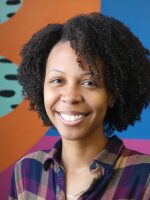
At 38 years old, Tonda Thompson made a choice that changed her life.
“I just felt like the uterus that I had was a problem, and I wanted it out right away,” said the Milwaukee community health advocate and mother of two. “I looked like I was pregnant for about a year, and you can see I don’t look like that anymore.”
Thompson faced an issue that impacts many women, causing pain and confusion: fibroids. She said frequent trips to the emergency room and an eventual demand for an ultrasound led to doctors finding several of the growths in her body. One was seven centimeters, or about the size of an apple.
“Fibroids are the most common, benign tumor in women,” explained Dr. Rebecca Mahn, a specialist with Froedtert & the Medical College of Wisconsin and Thompson’s OB-GYN. “It’s benign, normal tissue — non-cancerous — but can be really problematic and symptomatic.
“You might hear them called leiomyoma or myoma. That’s all the same thing as a fibroid. It’s just sort of an aberrant overgrowth of uterine cells that are stimulated by estrogen and progesterone, the most common hormones of the female cycle. And, for some reason, a cluster of these cells just keeps growing.”
The topic of uterine fibroids has made recent headlines. Actress and advocate Lupita Nyong’o revealed she lives with more than 50 in her body, even after surgery. While the exact cause is unknown, experts believe genetics and race play a role. More than 70% of women develop them by age 50. For Black women, up to 90% are at risk.
“Unfortunately, we don’t have a good sense of the exact reason why,” Dr. Mahn said. “[We] definitely suspect that there’s a genetic component of anyone of African ancestry having a higher risk. However, there are studies showing that the experience of fibroids is also different, and that could be because of access to healthcare.”
Thompson said she watched her mom and sisters suffer from the tumors, not thinking it would happen to her. But the impact was significant and took a toll on her mental health, as well as her business.
“I have a business called She Slangs Wood, and last summer I was building fences by myself and had all the energy in the world,” Thompson said. “And then, one day, a lot of the time I couldn’t get up. I was not meeting my deadlines with jobs, with carpentry jobs.”

Treatments for fibroids include everything from simply waiting to taking medications that can shrink them to procedures that can remove them. But even with seemingly positive outcomes, they can grow back, which makes a hysterectomy — the complete removal of the uterus — a final option.
“There’s a stigma where people say — which is wrong —- ‘When you get a hysterectomy, you’re not a woman anymore,’” Thompson said. “But I did feel like there was a part of me taken out. I’m like, ‘Oh my God, I can’t have babies anymore, and I’m a healthy baby advocate, and I can’t have babies anymore.’
“But, at the moment of the decision, I was like, ‘I don’t want to bleed anymore, I don’t want to have any problems with anything. Just take it out.’”
In some ways, Thompson is relearning how to care for herself. She’s focused on eating healthier, delegating tasks and getting back active. And as research continues on fibroids, Dr. Mahn encourages women to advocate for themselves and find what’s right for their lives.
“Every OB-GYN, I think, has a different comfort level with the many treatment options,” she said. “So if you’re not getting the options you were hoping for, it's definitely reasonable to ask to talk to somebody else or be referred to a fibroids center.”