They lift your spirits, prompt you to think, make you feel grateful and inspire you to do more. They connect you to our community, shining a spotlight on what's good about our city. They're stories that are Uniquely Milwaukee.
The phones we carry in our pockets give us the ability to snap a picture any time we want. But a nearly 200-year-old form of photography is still around today — and still finding new fans.
Milwaukee’s own Amber Ascher has made a business out of her interest in the Victorian-era artform, which is making a return in this fast-paced digital age.
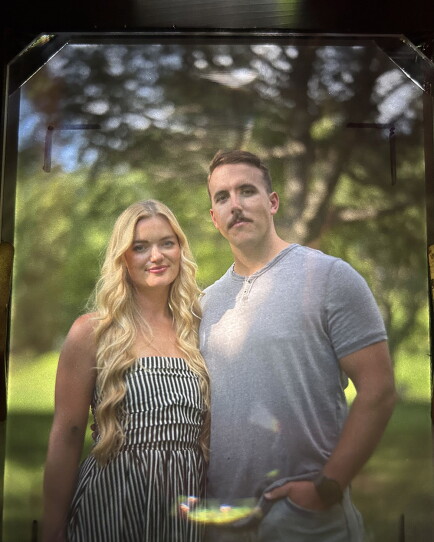
“I think with the rise of A.I., digital-perfected images, people want this even more because it's so obviously handmade,” she said. “Sometimes, you literally see the fingerprint of the photographer on the plate from them handling it, and it's just special for that reason.”

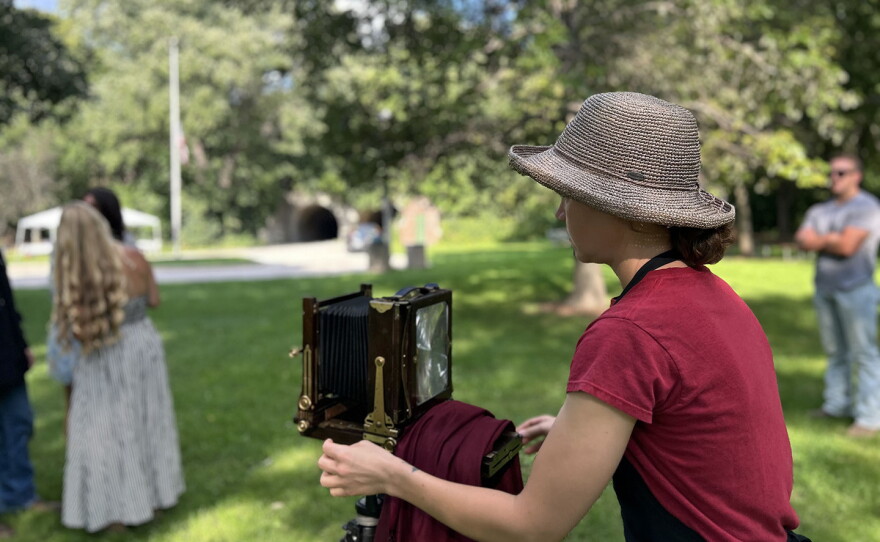
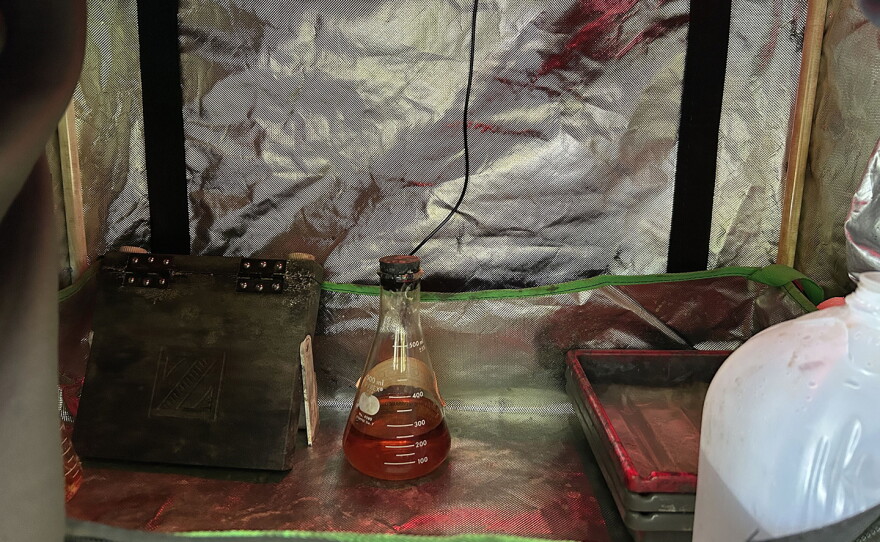
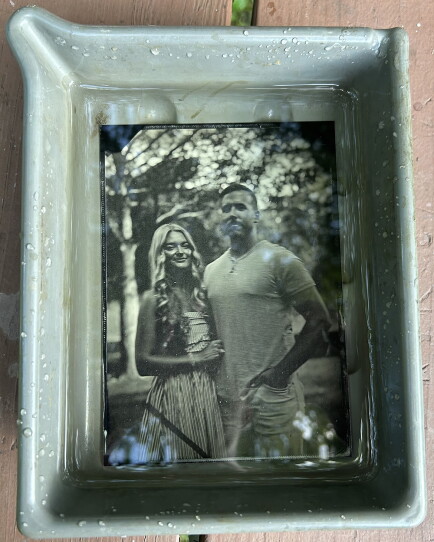
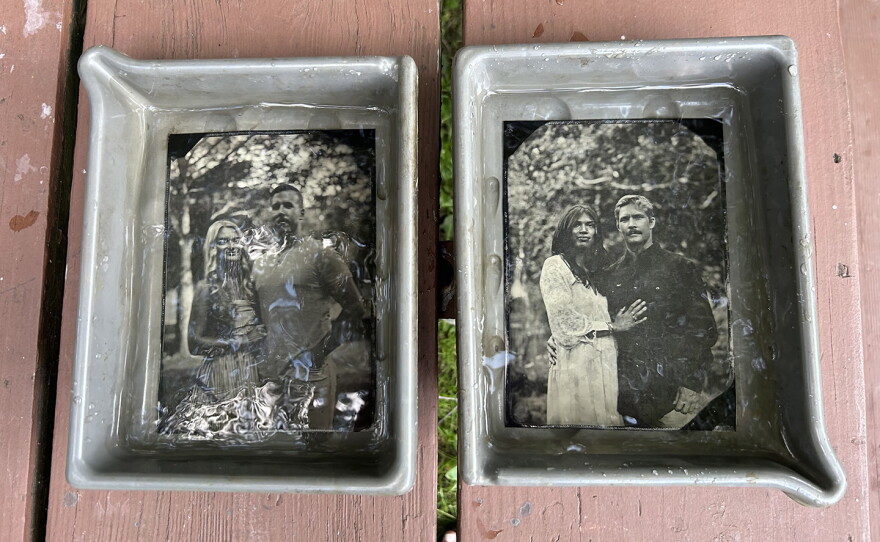
The one-of-a-kind photo is created through a process called wetplate collodion, in which an antique camera, light, chemistry and a portable darkbox work together to capture and develop a specific moment. The tintype itself is a black-and-white photograph on a thin piece of metal that can last for generations.
“It's funny because everything involved with tintypes requires patience,” Ascher said. “You have to take your time, be really careful. But your patience is rewarded with immediate results. You get to see the photo develop.”
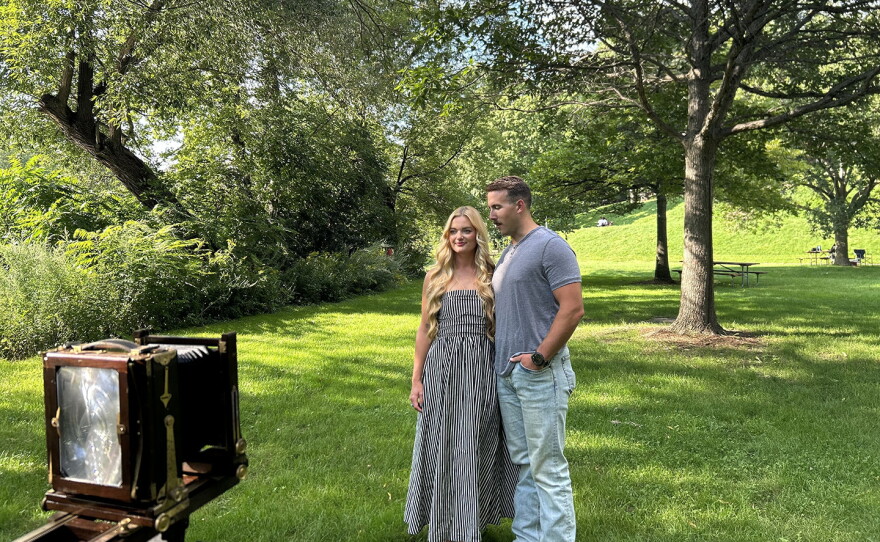
It’s estimated there are only a few thousand photographers who specialize in tintypes within the United States. Amber, one of the few in Wisconsin, often sets up at local events and festivals. But, on the day I visited, she was hosting a private session with Tyler and Taylor Richards and Jim and Kaitlan Thompson — two couples who met in college and have been friends for years.
“There's something really special about you only having one opportunity to get it, and that's your opportunity to have an heirloom to pass down to your family members,” Taylor Richards said. “It's just timeless and beautiful.”

In the past, heirlooms like physical photographs were preserved and passed down from one generation to the next. Now, instead of photo albums, most people tend to keep a digital archive that holds all of their memories.
But a tintype really can last for generations. In fact, the Smithsonian Museum has a collection of tintypes dating all the way back to the 1850s, when the art form was born.
Longevity wasn’t at the top of Kaitlan Thompson’s list when deciding to try the more methodical photo session. Instead, it was the patience and attention to detail needed for tintype portraits that caught her eye.
“We are so used to fast gratification and being able to take and retake and reevaluate pictures,” she said. “So this is just a really nice opportunity to slow down and be really intentional with what we're doing today. Then, as a result, you have just a truly unique piece of artwork … and a story of us, too, to add to it.”