




They lift your spirits, prompt you to think, make you feel grateful and inspire you to do more. They connect you to our community, shining a spotlight on what's good about our city. They're stories that are Uniquely Milwaukee, sponsored by the Milwaukee Public Library.
I'll be honest, this one's personal.
A few years ago, I tried to buy a house in Milwaukee. Every offer I made got outbid by LLCs with out-of-state addresses and cash offers that closed in two weeks. I gave up.
Recently, I spent time with someone else who went on that journey — with a very different outcome. Keilyn Borrero, a single mom of four, was in the same headspace I was at the start. She told me she convinced herself it would never happen. One income. Prices spiking. The math just didn’t work.
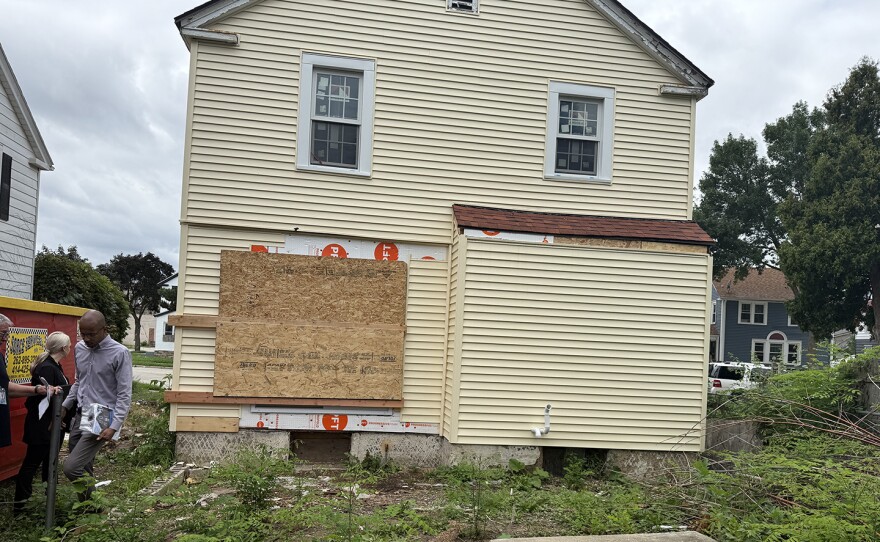
Of course, she told me all of that while standing in the house she now owns thanks to the City of Milwaukee’s Homes MKE program. Then she walked me through her new place on the north side: the pantry she insisted on, the big yard where her 10-year-old finally has space to kick a soccer ball, the spot where she wants to plant lavender next spring.
"I was crying the whole time," she said about the closing day, when she thought to herself, "This is finally happening, for me and for my kids."
Here's how the program works:
The city takes abandoned, tax-foreclosed properties — houses that have sat vacant for years, dragging down entire blocks — and partners with developers to gut-renovate them. We’re talking new plumbing, new electrical, new roofs. Then they sell them for between $140,000 and $160,000 to first-time buyers, many of whom qualify for down-payment assistance that can reach $28,000.
Borrero’s home is part of the Milwaukee Community Land Trust, which means she owns the house but not the land beneath it — a model that keeps her mortgage affordable now and ensures the next family gets the same opportunity later.
Talking about the program with commissioner of city development Lafayette Crump, I used the phrase “generational wealth,” which in large part stems from something like home ownership. He reframed it as generational stability. "You can plan a little bit better," he told me. "You can dream a little bit more."
Milwaukee has one of the widest racial homeownership gaps in the country: About 55.8% of white households own their homes compared with 27% of Black households and 37.5% of Hispanic households in the city. That's not an accident; it's the compound interest of decades of redlining and disinvestment.
Homes MKE won't fix it all. But when I asked Keilyn where she sees herself in five years, she didn't hesitate: "I see myself here, sitting in the backyard, seeing the kids run, having a garden next to me."
That's not just housing policy. That's a different kind of inheritance — one that passes from family to family, permanently affordable, building something that outlasts any single owner.

This story was reported with the assistance of A.I. tools, which were used primarily to outline and create a working draft. Radio Milwaukee staff conducted all interviews, compiled all of the audio and edited all of the media involved with the project.


